• Home
  • Search
  • Browse Collections
  • My Account
  • About
  • DC Network Digital Commons Network™
Skip to main content
Scholarly Resources from Concordia Seminary

Scholarly Resources from Concordia Seminary

  • Home
  • About
  • FAQ
  • My Account

Home > Seminary Courses > Elementary Greek

Elementary Greek

Elementary Greek


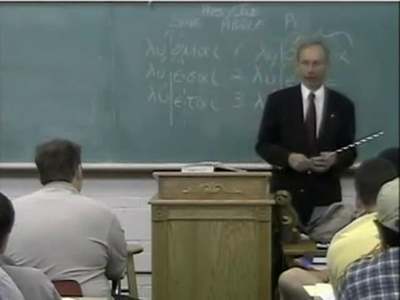
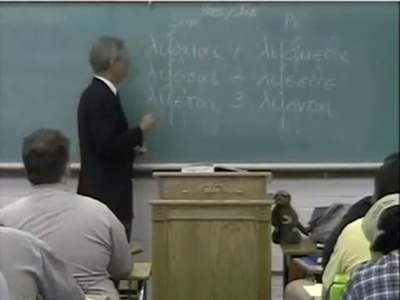
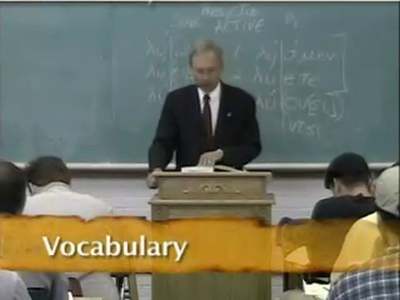
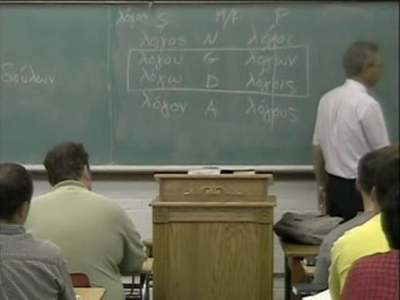
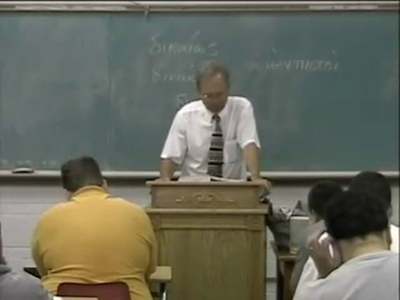
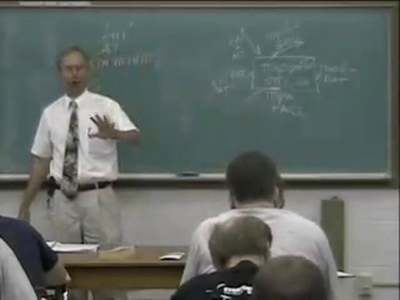
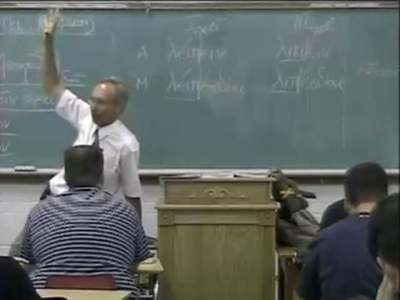
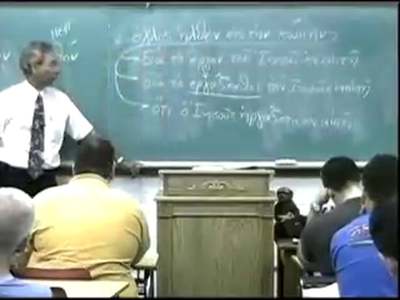
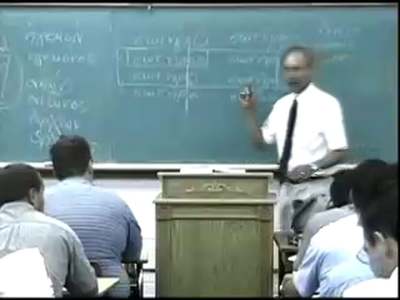
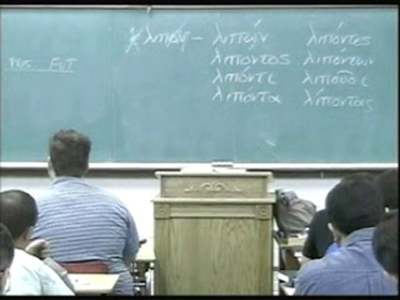
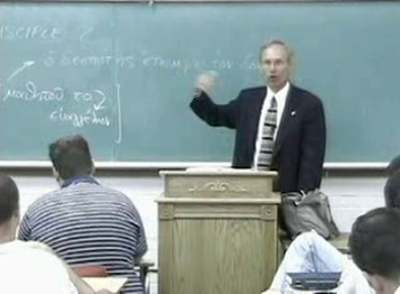
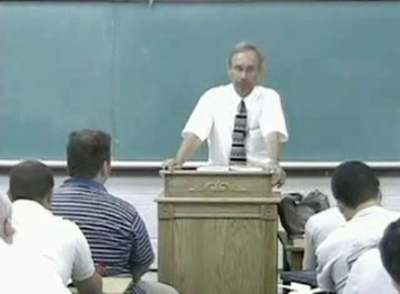
The essentials of Greek morphology, syntax, and vocabulary taught Dr. Voelz.

Printing is not supported at the primary Gallery Thumbnail page. Please first navigate to a specific Image before printing.

Follow

Switch View to Grid View Slideshow
 
  • Chapter 23.B by James Voelz

    Chapter 23.B

    James Voelz

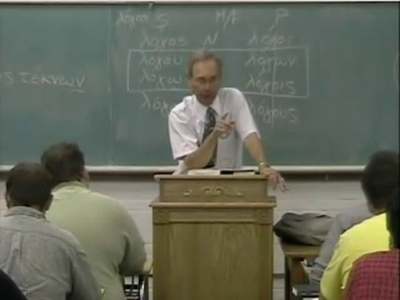
    The article with "de" is used to change subjects in a conversation or narrative.

  • Chapter 23.D by James Voelz

    Chapter 23.D

    James Voelz

    "kai egeneto" is a Hebrew structure from the LXX.

  • Chapter 24.B by James Voelz

    Chapter 24.B

    James Voelz

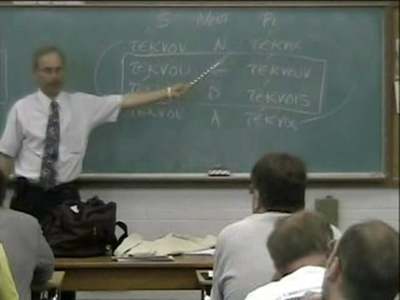
    The adjective "one" is third declension.

  • Chapter 24.C,D by James Voelz

    Chapter 24.C,D

    James Voelz

    Interrogative pronouns ask a question ("Who?"). Indefinite pronouns indicate "someone."

  • Chapter 25.A by James Voelz

    Chapter 25.A

    James Voelz

    The perfect tense is used to express the aftermath of a completed past act, that has a present, enduring result.

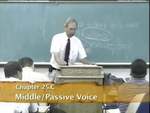
  • Chapter 25.C by James Voelz

    Chapter 25.C

    James Voelz

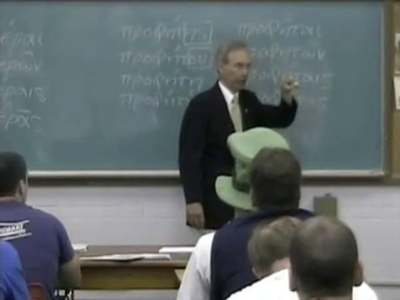
    The morphology for middle/passive perfect verbs.

  • Chapter 25.C.2 by James Voelz

    Chapter 25.C.2

    James Voelz

    The morphology for middle/passive perfect verbs, continued.

  • Chapter 25.C.2 1 by James Voelz

    Chapter 25.C.2 1

    James Voelz

    The morphology for middle/passive perfect verbs, concluded.

  • Chapter 26.A by James Voelz

    Chapter 26.A

    James Voelz

    The pluperfect is the past time version of the perfect.

  • Chapter 26.B by James Voelz

    Chapter 26.B

    James Voelz

    The Principle Parts Chart.

  • Chapter 27.A by James Voelz

    Chapter 27.A

    James Voelz

    Liquid verbs are irregular.

  • Chapter 27.C by James Voelz

    Chapter 27.C

    James Voelz

    Liquid verbs, summarized. Third principle parts of "baino" and "ginosko".

  • Chapter 28.A by James Voelz

    Chapter 28.A

    James Voelz

    The subjunctive mood deals with futurity or uncertainty in particular contexts.

  • Chapter 28.C by James Voelz

    Chapter 28.C

    James Voelz

    Subjunctive mood verbs are chiefly identified by a new, long, connecting vowel pattern.
  • Chapter 28.C 1 by James Voelz

    Chapter 28.C 1

    James Voelz

    Subjunctive mood verbs in independent clauses have four uses.
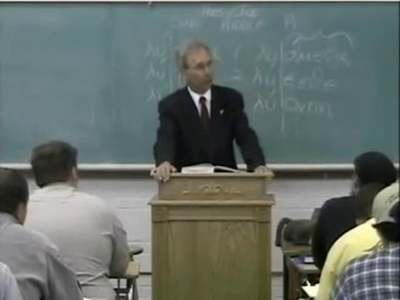
  • Chapter 29 by James Voelz

    Chapter 29

    James Voelz

    The use of subjunctive mood verbs in dependent or subordinate clauses.
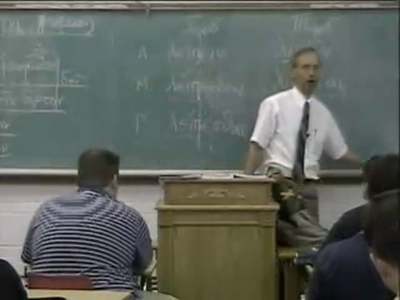
  • Chapter 29.B.1 by James Voelz

    Chapter 29.B.1

    James Voelz

    Subjunctive mood uses in dependent or subordinate clauses with "hina."

  • Chapter 29.B.2 by James Voelz

    Chapter 29.B.2

    James Voelz

    Subjunctive mood uses in dependent or subordinate clauses with "an."

  • Chapter 30 by James Voelz

    Chapter 30

    James Voelz

    Review of (-ew) contract verbs.

  • Chapter 30 1 by James Voelz

    Chapter 30 1

    James Voelz

    Morphology for (-aw) contract verbs.

  • Chapter 30.B.1 by James Voelz

    Chapter 30.B.1

    James Voelz

    Contraction occurs only in the first principle part.

  • Chapter 30.B.2 by James Voelz

    Chapter 30.B.2

    James Voelz

    Morphology for (-aw) contract verbs, continued.

  • Chapter 31 by James Voelz

    Chapter 31

    James Voelz

    Morphology for (-ow) contract verbs.

  • Chapter 31.A by James Voelz

    Chapter 31.A

    James Voelz

    Morphology for (-ow) contract verbs, continued.

  • Chapter 31.B.1.a by James Voelz

    Chapter 31.B.1.a

    James Voelz

    Morphology for active present (-ow) contract verbs.

 
  • 1
  • 2
  • 3
  • 4
  • 5
  • 6
  • 7


Browse

  • Collections
  • Disciplines
  • Authors

Search

Advanced Search

  • Notify me via email or RSS

Author Corner

  • Author FAQ

801 Seminary Place
St. Louis, Missouri 63105
314.505.7000

  • Facebook Link
  • Twitter Link
  • Instagram Link
  • RSS Link
 
Elsevier - Digital Commons
Concordia Seminary

Home | About | FAQ | My Account | Accessibility Statement

Privacy Copyright