
Loading...
Start Date
8-7-2025 8:30 AM
End Date
7-7-2025 9:30 AM
Description
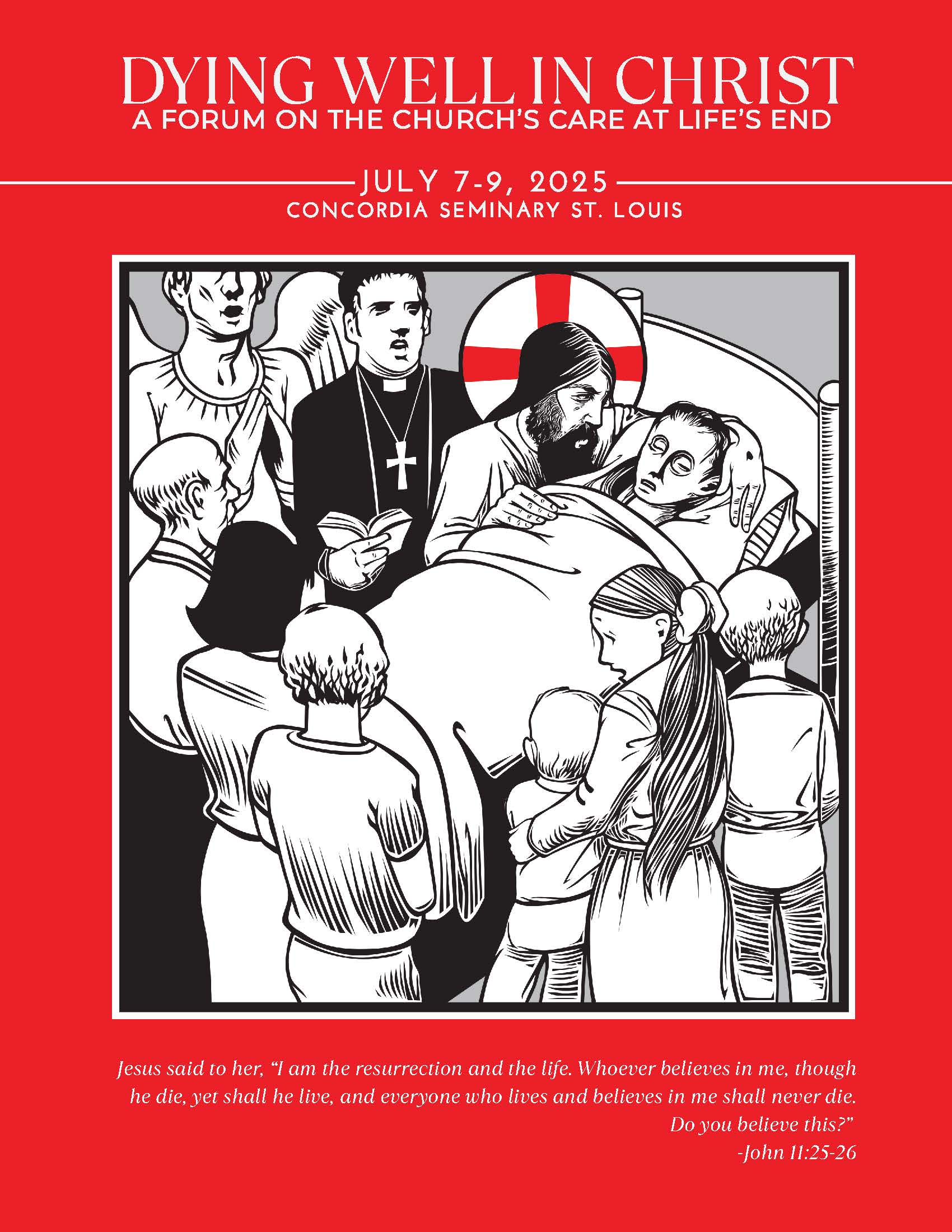
In contrast to the medieval “art of dying” manuals that failed to give assurance to the dying as these works tried to instruct them in proper repentance for final reconciliation with God, Luther and his followers brought assurance of God’s promise of forgiveness and eternal life through the use of the means of grace as they ministered to the dying. Examples from 16th and 17th centuries recount how ministry to the dying was practiced in early modern Lutheranism.
Submission Type
Bible Study; Lecture; Sermon Prep
Scripture References in this Resource (separated by semi-colons)
Matthew 7:14; John 3:16; John 3:18; John 16:33; Romans 5:20; Romans 8:28; Romans 14:7-9; Hebrews 6:4-6; Hebrews 9:28; Hebrews 10:26-27; Hosea 2:14; Isaiah 9:6; Jeremiah 17:14-17; Jeremiah 17:16; Revelation 7:13-17; Psalm 23:4; Psalm 31:5; Psalm 51:5; Psalm 68:20; Psalm 102:25;
Submission Audience
Laity; Ministers; Scholars
Submission Cost
Free
In the Hour of Death: The Wittenberg Way of Dying
In contrast to the medieval “art of dying” manuals that failed to give assurance to the dying as these works tried to instruct them in proper repentance for final reconciliation with God, Luther and his followers brought assurance of God’s promise of forgiveness and eternal life through the use of the means of grace as they ministered to the dying. Examples from 16th and 17th centuries recount how ministry to the dying was practiced in early modern Lutheranism.